
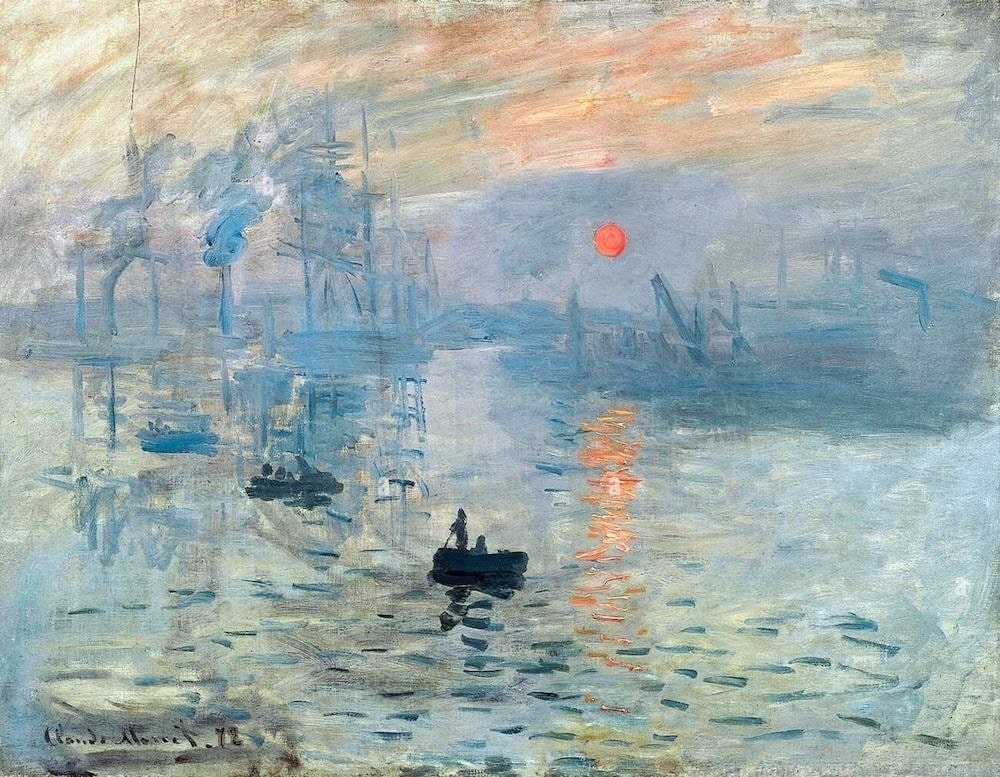
Photo: Impression Sunrise by Claude Monet
Introduction French Impressionism, emerging in the late 19th century, marked a bold departure from academic traditions in art. Instead of historical, mythological, or religious subjects painted in studios, Impressionist artists turned their gaze toward everyday life and nature, capturing fleeting moments, changes in light, and the vibrancy of modern society. Rooted in innovation, this movement forever changed the trajectory of Western art.
Breaking from Tradition Traditional French art was dominated by the formal, precise style endorsed by the Academy. Impressionist painters rejected these standards, preferring spontaneity, loose brushwork, and open-air painting (plein air) to depict authentic visual experiences. They focused on sensation rather than idealized representation, making the act of seeing itself the subject of their work.
Key Figures and Works Claude Monet, Pierre-Auguste Renoir, Camille Pissarro, Édouard Manet, and Berthe Morisot were pioneers of the movement. Monet’s Impression, Sunrise (1872), which inspired the term “Impressionism”, encapsulated the essence of the style with its soft forms and luminous colors. Renoir painted joyful scenes of leisure, Manet bridged realism and modernism, and Morisot brought a personal, often domestic, sensitivity to her works.
Techniques and Aesthetic Vision Impressionists used rapid brushstrokes and pure, unmixed colors to evoke natural light and atmosphere. Shadows became colorful rather than dark, and subjects were often off-center or cropped, echoing photography’s influence. Their goal was to capture the impression of a moment, not a static reality, resulting in artworks full of movement, light, and emotion.
Subjects and Social Shifts The rise of industrialization, urbanization, and a modern leisure class provided new subjects: train stations, cafés, gardens, and boulevards. Impressionist art chronicled the transformation of Paris and the rhythms of contemporary life. It democratized art’s themes, portraying ordinary people and scenes that traditional art had largely ignored.
Legacy and Impact Though initially met with criticism and rejection, French Impressionism eventually gained recognition and acclaim. It laid the groundwork for later movements such as Post-Impressionism, Fauvism, and abstraction. Its influence extends far beyond France, shaping the ways in which modern artists engage with perception, color, and emotional immediacy.
French Impressionism revolutionized art by honoring the transitory beauty of the world as it appears in a single glance. These painters captured not just what they saw, but how they saw it—making vision itself the subject. Today, their luminous canvases remain powerful testaments to an artistic era that embraced light, life, and the immediacy of experience.