
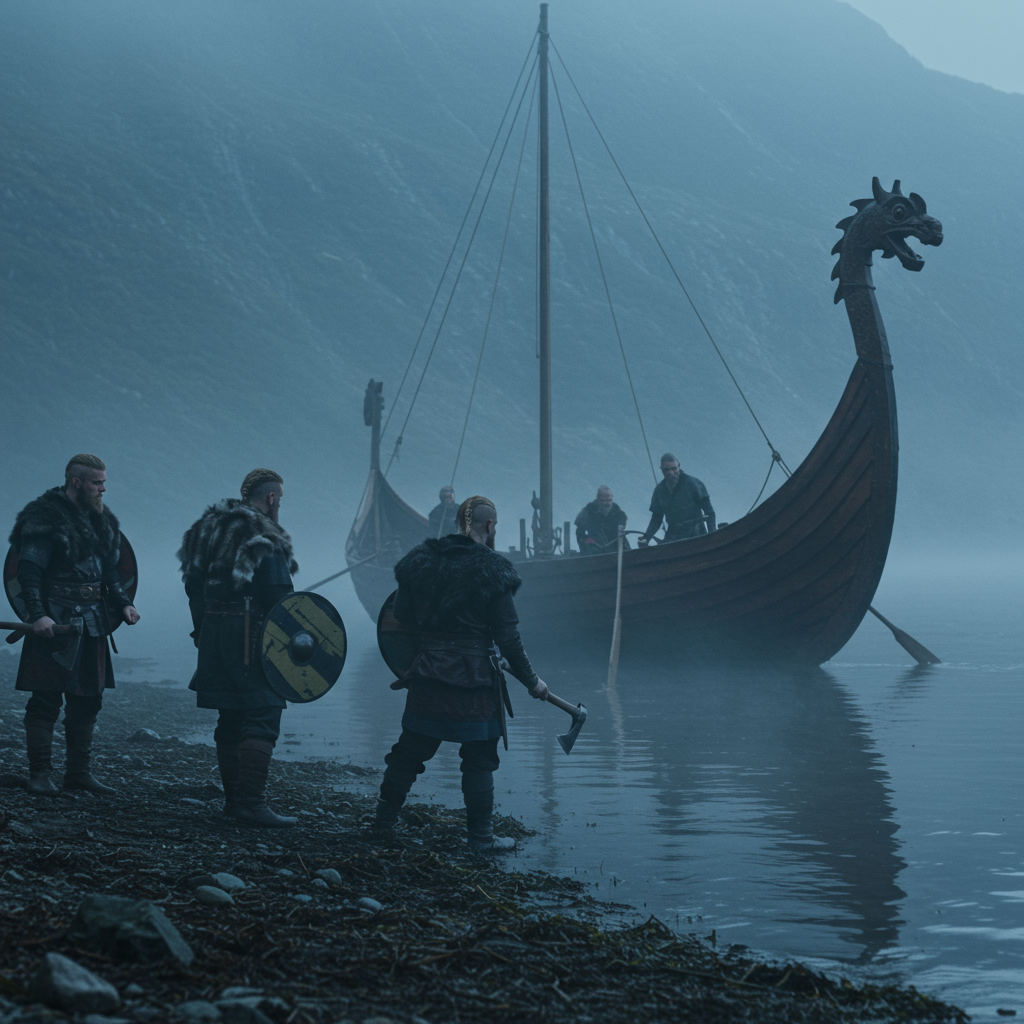
The term “Viking” often conjures images of longships slicing through icy waters, battle cries echoing across coastal villages, and horned helmets (which, by the way, they never wore). But the reality of Viking society is far more nuanced. Between the 8th and 11th centuries, these Norse seafarers were not just plunderers, they were also pioneers of trade, exploration, and cultural exchange.
Raiders: Masters of the Sea and War
Vikings began their infamous raids in 793 CE with the attack on Lindisfarne, a monastery off the coast of England. These lightning strikes were designed to gather wealth, assert power, and destabilize rival territories.
Tactical Warfare: Their hit-and-run strategies made them almost impossible to defend against.
Yet raiding wasn’t just chaos it was organized. Entire communities prepared, supported, and benefited from the wealth brought home.
Traders: Global Network Builders
Beyond raiding, Vikings were shrewd merchants who forged one of the most impressive trade networks of their time. Their routes stretched from Scandinavia to the Middle East, Central Asia, and even North America.
Key Commodities: Furs, amber, honey, swords, and slaves.
Trade Hubs: Towns like Hedeby, Birka, and Novgorod became bustling marketplaces.
Cultural Exchange: Vikings adopted foreign gods, ideas, and technologies through trade.
Archaeological finds, such as Arabic coins in Sweden and silk in Viking graves, show just how interconnected their world was.
A Culture of Complexity
The Viking Age was not just about war and commerce it was a time of transformation. Norse mythology, runic inscriptions, and shipbuilding innovations reveal an intellectually rich and deeply spiritual people.
Storytellers and Poets: Skalds kept history and legends alive through powerful verses.
Engineering Mastery: The clinker-built longship was a revolutionary naval design.
Legal Systems: They developed “things” early assemblies for legal disputes and governance.
Legacy: Far Beyond the Raid
Today, the legacy of the Vikings is felt not only in museum artifacts but in modern languages, place names, and genetic lineages. They helped shape medieval Europe, navigated the unknown, and blurred the line between warrior and entrepreneur.
Conclusion
So, were the Vikings raiders or traders? They were both and more. To paint them as only ruthless marauders is to miss the full arc of a civilization that balanced sword and scale, fury and finesse. In truth, the Vikings didn’t just take they gave the world stories, knowledge, and connections that still resonate today.
Curiosities
They Sold “Unicorn Horns”
Vikings hunted narwhals and sold their spiral tusks to European elites as unicorn horns, believed to have magical powers and used in royal medicine.
Clean Freaks of the Dark Ages
Despite their rugged image, Vikings were obsessed with hygiene. Archaeologists found tweezers, razors, and even ear cleaners in Viking graves. They bathed weekly far more than most Europeans at the time.
Viking Graffiti Was a Thing
Runes weren’t just for spells or memorials. Vikings carved messages like “Ingigerth is the most beautiful of all women” and “Halfdan was here” into walls and monuments basically ancient Norse Instagram captions.
Berserkers on Mushrooms?
Some Viking warriors, known as berserkers, may have taken hallucinogenic mushrooms or henbane before battle to enter a trance-like rage.
They Skied for Fun
Vikings didn’t just ski to get around, they had a god of skiing, Ullr, and treated it as a sport. Scandinavians had been skiing for thousands of years before the Viking Age.
Not All Vikings Were Scandinavian
The Viking world was culturally diverse. As they expanded, they absorbed people from conquered lands, meaning not every Viking was born in Scandinavia.
They Founded Dublin
Vikings established Dyflin, a trading post in Ireland that evolved into modern-day Dublin. They ruled it for nearly 300 years.
They Reached North America First
Leif Erikson and his crew landed in Newfoundland around 1000 AD 500 years before Columbus. They called it “Vinland” due to the wild grapes.