
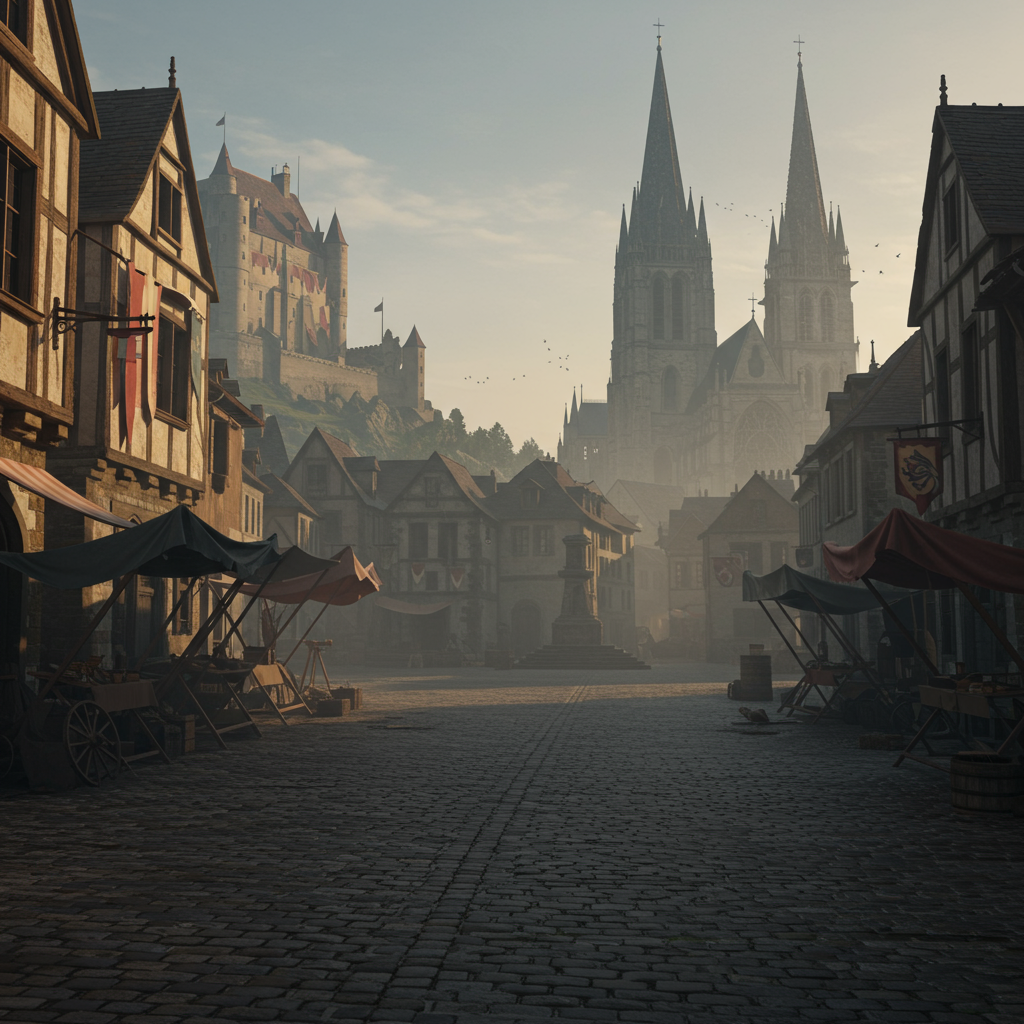
The Middle Ages, spanning roughly from the 5th to the 15th century, were far from stagnant or “dark.” This millennium witnessed the rise of epic stone fortresses, breathtaking cathedrals, and dynamic cultural exchanges that forged the tapestry of modern Europe.
Castles: Power, Defense, and Prestige
From wind-swept Scottish highlands to the sunny valleys of Spain, medieval castles defined the European landscape.
Purposes of Castles:
Military Fortresses: Built for defense against rival lords and invading armies.
Seats of Power: Lords, barons, and royalty ruled their lands from these stone citadels.
Symbols of Status: The grandeur of a castle reflected its owner’s wealth and influence.
Architectural Evolution:
Motte-and-bailey designs gave way to stone keeps with drawbridges and curtain walls.
Notable castles like Carcassonne (France), Neuschwanstein (Germany), and Windsor Castle (England) still awe visitors today.
Castles weren’t just functional, they were epic stages for medieval politics, drama, and legends.
Cathedrals: Heaven on Earth
While castles reached upward with stone walls, cathedrals soared toward the heavens as monuments to faith, art, and community.
Features of Medieval Cathedrals:
Gothic Architecture: Pointed arches, ribbed vaults, and flying buttresses (e.g. Notre-Dame in Paris).
Stained Glass Windows: Told biblical stories to largely illiterate congregations.
Towers and Spires: Visible for miles, drawing pilgrims and villagers together.
Romanesque Style: Earlier style with thick walls and rounded arches (e.g. Speyer Cathedral, Germany).
Cathedrals served not just as places of worship but also as centers for learning, music, and social gathering.
Cultural Crossroads: Interactions and Exchange
Though fragmented by feudalism, Europe was never isolated. The Middle Ages were defined by dynamic interactions between cultures.
Key Influences:
Islamic Spain (Al-Andalus): Transmitted Greek philosophy, algebra, and astronomy to Christian Europe.
The Crusades: Opened channels between East and West, bringing back spices, textiles, and new ideas.
Trade Routes: Merchants traveled from Venice and Genoa to Constantinople, bridging Christian, Islamic, and Orthodox worlds.
Scholarly Exchange: Universities like Bologna and Oxford emerged, translating works from Arabic, Greek, and Latin.
Even amid wars and religious tension, ideas traveled farther and faster than swords.
Life Behind the Stone Walls
Beyond castles and cathedrals, everyday life shaped the heartbeat of medieval Europe:
Feudalism: A social system bound peasants to lords in exchange for protection and land.
Guilds: Controlled trade and craftsmanship in growing urban centers.
Festivals: Religious and seasonal celebrations brought color to village life.
Women: From nuns and peasant farmers to powerful queens and mystics (like Hildegard of Bingen), women played diverse roles.
Legacy of the Middle Ages
Though the era ended with the Renaissance, its legacy remains vivid:
Architecture: Gothic cathedrals and castles are iconic symbols of Europe.
Philosophy & Law: Medieval thought laid the foundation for universities and legal systems.
Language & Literature: Works like Beowulf, The Divine Comedy, and The Canterbury Tales still influence storytelling today.
The Middle Ages weren’t “dark”, they were dazzling in stone and spirit. Castles guarded kingdoms, cathedrals reached heavenward, and cultures collided to shape a continent’s soul.