
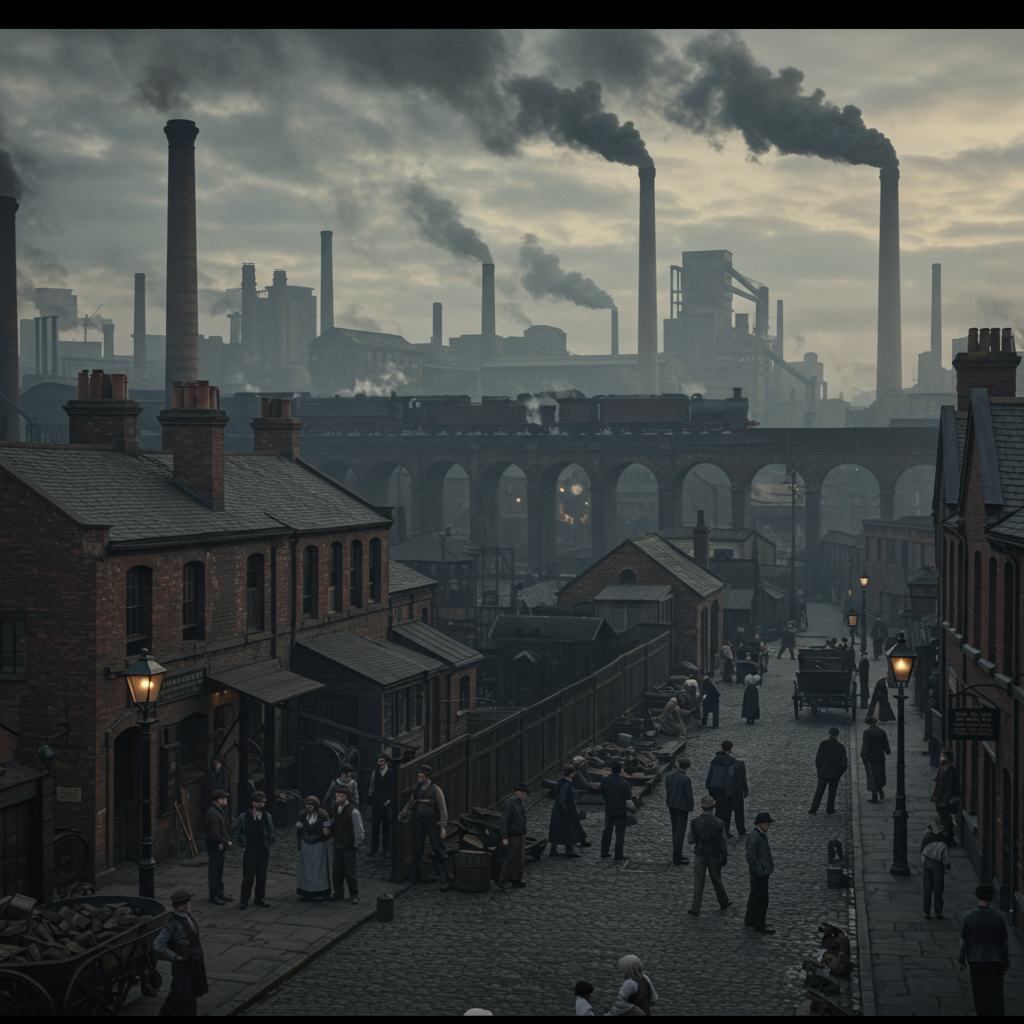
The Industrial Revolution was one of the most transformative periods in European history. Beginning in Great Britain in the late 18th century, it spread across the continent, reshaping economies, societies, and landscapes. From steam engines to sprawling factories, industrialization marked the shift from agrarian life to mechanized production, laying the foundation for the modern world.
Origins and Catalysts
Several factors converged to ignite industrialization in Europe:
- Agricultural Revolution: Innovations like crop rotation and the seed drill boosted food production, freeing labor for industrial work.
- Population Growth: A surge in population created both demand for goods and a workforce for factories.
- Natural Resources: Abundant coal and iron in regions like Britain, Belgium, and Germany powered machines and construction.
- Capital and Trade: Colonial wealth and expanding global trade networks provided investment and markets.
- Technological Innovation: Inventions like the spinning jenny, power loom, and steam engine revolutionized production2.
Key Features of Industrialization
| Feature | Description |
|---|---|
| Factory System | Replaced cottage industries with centralized, mechanized production |
| Steam Power | Enabled faster manufacturing and transportation via trains and ships |
| Urbanization | Rapid growth of cities like Manchester, Lyon, and the Ruhr region |
| Labor Specialization | Division of tasks increased efficiency but reduced worker autonomy |
| Transportation Networks | Railways, canals, and roads connected markets and resources |
Britain Leads the Way
Britain was the birthplace of industrialization, thanks to its:
- Rich coal and iron deposits
- Stable political and legal systems
- Strong banking and investment culture
- Inventive minds like James Watt, Richard Arkwright, and George Stephenson
By the mid-19th century, Britain’s factories and railways were the envy of Europe.
Continental Expansion
Industrialization spread unevenly across Europe:
- France: Focused on luxury goods and mechanized silk production; industrial strikes began in the 1830s.
- Germany: Unified industrial efforts after 1834; the Ruhr and Saar regions became heavy industry hubs.
- Belgium: Rich in coal and iron, it industrialized early and mirrored British development.
- Netherlands & Scandinavia: Industrialized later, often focusing on agriculture and niche manufacturing.
- Southern & Eastern Europe: Lagged behind due to limited resources and fragmented economies.
Social Impact and Labor Movements
Industrialization brought prosperity but also hardship:
- Working Conditions: Long hours, low wages, and dangerous environments, especially for women and children.
- Living Conditions: Overcrowded slums, poor sanitation, and health crises in rapidly growing cities.
- Labor Unrest: Workers organized strikes and unions, demanding better treatment and wages.
- Reforms: Laws began to regulate child labor, working hours, and safety by the late 19th century.
Legacy of Industrialization
The effects of industrialization are still felt today:
- Economic Growth: Europe became a global industrial powerhouse.
- Technological Progress: Innovations in communication, transport, and manufacturing accelerated.
- Social Change: Class structures shifted, and democratic movements gained momentum.
- Environmental Impact: Pollution and resource depletion became pressing issues.
Industrialization in Europe wasn’t just about machines, it was about transformation. It redefined how people lived, worked, and thought, setting the stage for the modern age.