
The Renaissance meaning “rebirth” in French, was a transformative period in European history that bridged the gap between the Middle Ages and the modern era. Spanning roughly from the 14th to the 17th century, it ignited revolutions in art, science, philosophy, and politics, reshaping the cultural landscape of Europe and laying the foundation for the world we know today.
Origins and Historical Context
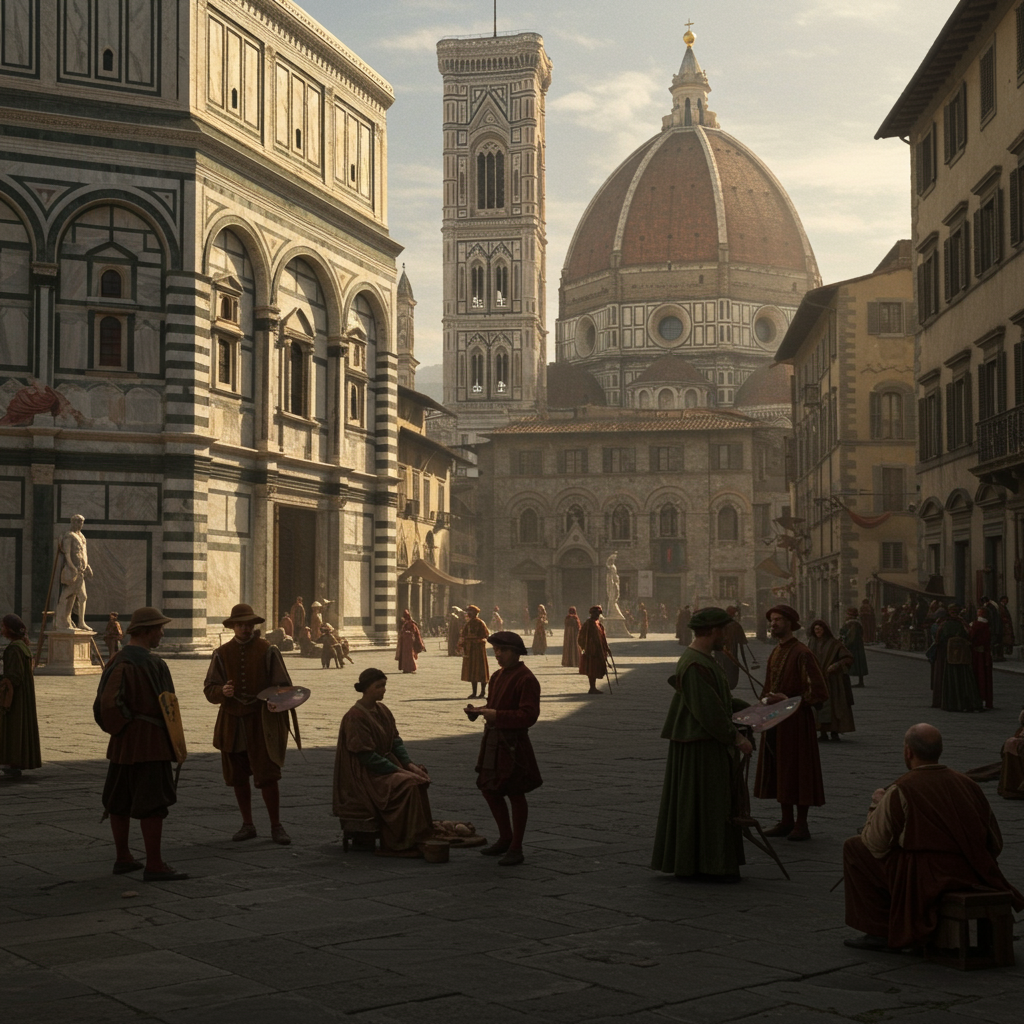
The Renaissance began in Italy, particularly in Florence, a city rich in trade, wealth, and classical heritage. Several factors contributed to its rise:
- Rediscovery of Classical Antiquity: Scholars revived ancient Greek and Roman texts, sparking new ideas in philosophy and art.
- Fall of Constantinople (1453): Greek scholars fled to Italy, bringing precious manuscripts and knowledge.
- Printing Press (c. 1440): Invented by Johannes Gutenberg, it revolutionized communication and education.
- Patronage: Wealthy families like the Medici funded artists and thinkers, fueling creativity.
Artistic Revolution
Renaissance art broke away from medieval symbolism and embraced realism, human emotion, and perspective.
Key Innovations:
- Linear Perspective: Developed by Brunelleschi, it added depth and realism to paintings.
- Chiaroscuro: Use of light and shadow to create dramatic effects.
- Anatomical Accuracy: Artists studied the human body to depict it more naturally.
Iconic Artists:
- Leonardo da Vinci – Mona Lisa, The Last Supper
- Michelangelo – David, Sistine Chapel ceiling
- Raphael – The School of Athens
- Botticelli – The Birth of Venus
Humanism and Intellectual Awakening
At the heart of the Renaissance was humanism, a philosophy that emphasized human potential, reason, and secular learning.
Key Thinkers:
- Petrarch – Father of humanism
- Erasmus – Promoted Christian humanism and education
- Machiavelli – Wrote The Prince, exploring political realism
- Pico della Mirandola – Oration on the Dignity of Man, a humanist manifesto
Humanists believed that studying classical texts could improve society and elevate the human spirit.
Scientific Breakthroughs
The Renaissance sparked a scientific revolution that challenged traditional beliefs and laid the groundwork for modern science.
Major Figures:
- Copernicus – Proposed the heliocentric model of the solar system
- Galileo – Improved the telescope and supported Copernican theory
- Vesalius – Advanced human anatomy
- Leonardo da Vinci – Combined art and science in anatomical studies and inventions
Observation, experimentation, and reason became the new tools of discovery.
Political and Social Shifts
The Renaissance also reshaped governance and society:
- Rise of City-States: Florence, Venice, and Milan became centers of power and culture.
- Diplomacy and Statecraft: New political theories emerged, influencing modern politics.
- Education and Literacy: The printing press made books more accessible, boosting literacy rates.
Legacy and Impact
The Renaissance left an indelible mark on Europe and beyond:
- Art and Architecture: Gothic and classical styles merged into timeless masterpieces.
- Philosophy and Ethics: Humanism influenced Enlightenment thought.
- Science and Innovation: Paved the way for the Scientific Revolution.
- Language and Literature: Writers like Shakespeare, Dante, and Cervantes enriched European languages.
The Renaissance wasn’t just a period, it was a cultural awakening that celebrated curiosity, creativity, and the human spirit. Its echoes still resonate in our art, science, and values today.