
At its height, the Roman Empire stretched from Britain to Egypt and from Portugal to Mesopotamia. It was a marvel of administration, multicultural integration, and architectural achievement.
Colosseum, Pantheon, and Roads symbolized imperial power and ingenuity.
Latin Language and Roman Law influenced cultures and governments far beyond its borders.
Emperors like Trajan and Hadrian brought territorial expansion and consolidation.
The decline of Rome was not a single event, but a long process shaped by internal and external forces:
Economic Troubles: Overreliance on slave labor and heavy taxation drained resources.
Military Strain: Constant wars and pressure from invading tribes like the Visigoths and Vandals eroded defenses.
Political Corruption & Instability: A revolving door of emperors weakened central authority.
Division of the Empire: In 285 CE, Emperor Diocletian split the empire into Eastern and Western halves. The West struggled while the East (Byzantine Empire) endured.
The Western Roman Empire fell in 476 CE, when the Germanic chieftain Odoacer deposed the last emperor, Romulus Augustulus. But its legacy lives on in countless ways from language and law to architecture and religion.
Legacy: Eternal Echoes
Though it crumbled, Rome’s impact shaped medieval Europe and echoes through Western civilization today. Cities still mimic its urban planning, legal codes hold its principles, and its grandeur continues to inspire.
Curiosities
They Thought Soap Was Gross
Romans preferred oil and scraping tools (strigils) to clean themselves. Soap was considered barbaric and was rarely used even though they had access to it.
Gladiator Blood as Medicine
Some Romans believed that drinking the blood of gladiators could cure epilepsy. After battles, spectators would rush to collect it, thinking it held mystical healing powers.
Caligula’s Horse Was a Senator
Emperor Caligula famously appointed his horse, Incitatus, as a senator. He even gave it a marble stable and jeweled collar either as satire or a sign of his eccentricity.
Toilet and Sewer Gods
Yes, really. Romans worshipped Cloacina, the goddess of the sewer system, and Crepitus, the god of flatulence and bowel movements. They believed these deities protected hygiene and health.
Gladiators Were Mostly Vegetarian
Despite their brutal profession, many gladiators ate a plant-based diet of barley and beans. It helped them bulk up without relying on meat.
The First Shopping Mall
Trajan’s Market in Rome was a multi-level complex with over 150 shops and offices. It’s considered the world’s first indoor shopping mall.
Mock Naval Battles in the Colosseum
Romans once flooded the Colosseum to stage epic sea battles (naumachiae). Real ships and fighters reenacted famous naval clashes for entertainment.
Secret Police Force
The Frumentarii started as grain collectors but evolved into a covert network of spies and assassins. They helped emperors maintain control through surveillance and intimidation.
[/vc_column_text][/vc_column][/vc_row]The Roman Empire began as a small settlement along the Tiber River in central Italy. By the 6th century BCE, Rome had overthrown its monarchy and established a Republic, paving the way for centuries of expansion.
Military Dominance: Rome’s disciplined legions conquered neighbors with strategy and brute force.
Infrastructure & Law: Roads, aqueducts, and codified laws built unity across territories.
Political Evolution: Internal conflicts and power struggles led to Julius Caesar’s ascent and assassination, ending the Republic.
In 27 BCE, Augustus became the first emperor, marking the dawn of the Roman Empire. Under his rule, Rome experienced the Pax Romana, a golden age of peace and prosperity.
Peak: Rome Rules the Mediterranean
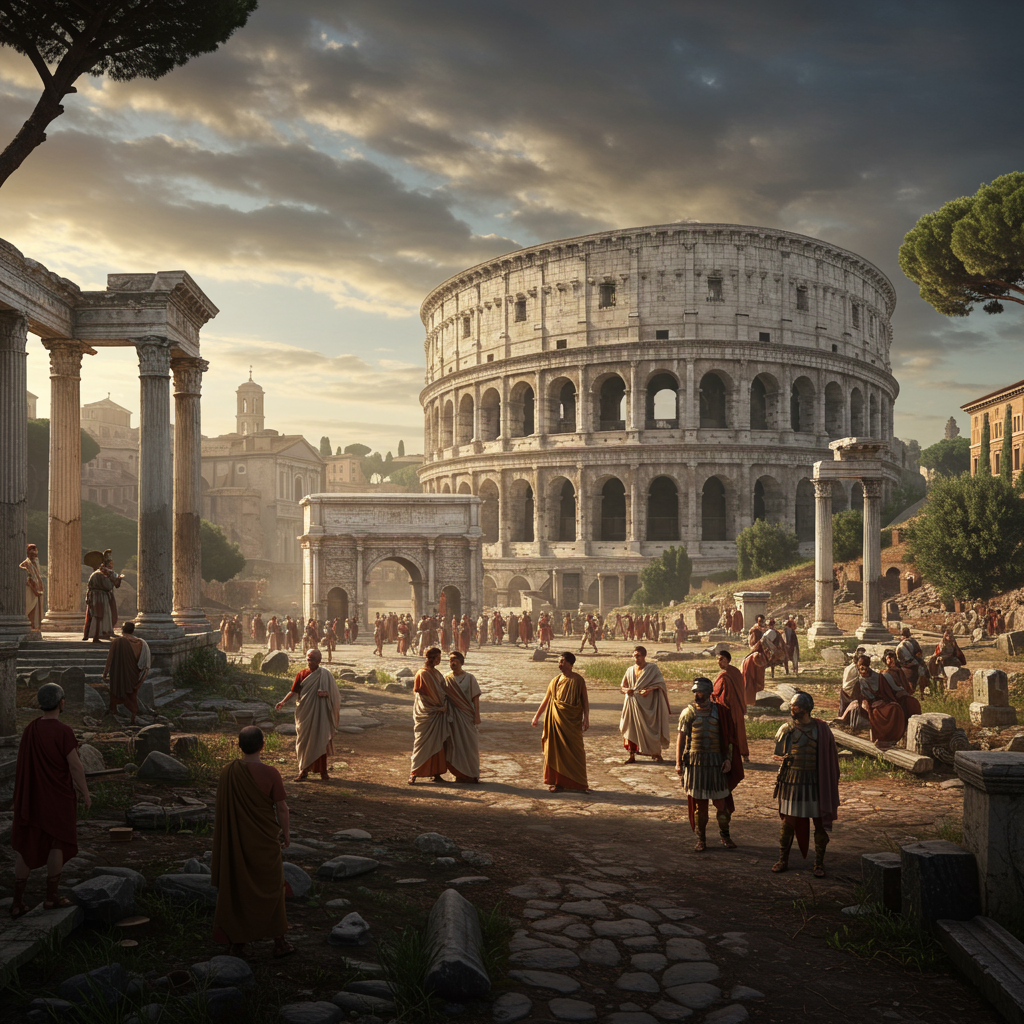
At its height, the Roman Empire stretched from Britain to Egypt and from Portugal to Mesopotamia. It was a marvel of administration, multicultural integration, and architectural achievement.
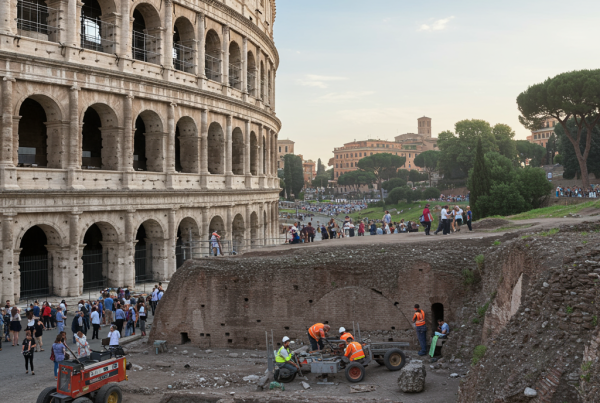
Colosseum, Pantheon, and Roads symbolized imperial power and ingenuity.
Latin Language and Roman Law influenced cultures and governments far beyond its borders.
Emperors like Trajan and Hadrian brought territorial expansion and consolidation.
Fall: A Gradual Unraveling
The decline of Rome was not a single event, but a long process shaped by internal and external forces:
Economic Troubles: Overreliance on slave labor and heavy taxation drained resources.
Military Strain: Constant wars and pressure from invading tribes like the Visigoths and Vandals eroded defenses.
Political Corruption & Instability: A revolving door of emperors weakened central authority.
Division of the Empire: In 285 CE, Emperor Diocletian split the empire into Eastern and Western halves. The West struggled while the East (Byzantine Empire) endured.
The Western Roman Empire fell in 476 CE, when the Germanic chieftain Odoacer deposed the last emperor, Romulus Augustulus. But its legacy lives on in countless ways from language and law to architecture and religion.
Legacy: Eternal Echoes
Though it crumbled, Rome’s impact shaped medieval Europe and echoes through Western civilization today. Cities still mimic its urban planning, legal codes hold its principles, and its grandeur continues to inspire.
Curiosities
They Thought Soap Was Gross
Romans preferred oil and scraping tools (strigils) to clean themselves. Soap was considered barbaric and was rarely used even though they had access to it.
Gladiator Blood as Medicine
Some Romans believed that drinking the blood of gladiators could cure epilepsy. After battles, spectators would rush to collect it, thinking it held mystical healing powers.
Caligula’s Horse Was a Senator
Emperor Caligula famously appointed his horse, Incitatus, as a senator. He even gave it a marble stable and jeweled collar either as satire or a sign of his eccentricity.
Toilet and Sewer Gods
Yes, really. Romans worshipped Cloacina, the goddess of the sewer system, and Crepitus, the god of flatulence and bowel movements. They believed these deities protected hygiene and health.
Gladiators Were Mostly Vegetarian
Despite their brutal profession, many gladiators ate a plant-based diet of barley and beans. It helped them bulk up without relying on meat.
The First Shopping Mall
Trajan’s Market in Rome was a multi-level complex with over 150 shops and offices. It’s considered the world’s first indoor shopping mall.
Mock Naval Battles in the Colosseum
Romans once flooded the Colosseum to stage epic sea battles (naumachiae). Real ships and fighters reenacted famous naval clashes for entertainment.
Secret Police Force
The Frumentarii started as grain collectors but evolved into a covert network of spies and assassins. They helped emperors maintain control through surveillance and intimidation.
[/vc_column_text][/vc_column][/vc_row]
From Republic to Imperial Power
The Roman Empire began as a small settlement along the Tiber River in central Italy. By the 6th century BCE, Rome had overthrown its monarchy and established a Republic, paving the way for centuries of expansion.
Military Dominance: Rome’s disciplined legions conquered neighbors with strategy and brute force.
Infrastructure & Law: Roads, aqueducts, and codified laws built unity across territories.
Political Evolution: Internal conflicts and power struggles led to Julius Caesar’s ascent and assassination, ending the Republic.
In 27 BCE, Augustus became the first emperor, marking the dawn of the Roman Empire. Under his rule, Rome experienced the Pax Romana, a golden age of peace and prosperity.
Peak: Rome Rules the Mediterranean
At its height, the Roman Empire stretched from Britain to Egypt and from Portugal to Mesopotamia. It was a marvel of administration, multicultural integration, and architectural achievement.
Colosseum, Pantheon, and Roads symbolized imperial power and ingenuity.
Latin Language and Roman Law influenced cultures and governments far beyond its borders.
Emperors like Trajan and Hadrian brought territorial expansion and consolidation.
Fall: A Gradual Unraveling
The decline of Rome was not a single event, but a long process shaped by internal and external forces:
Economic Troubles: Overreliance on slave labor and heavy taxation drained resources.
Military Strain: Constant wars and pressure from invading tribes like the Visigoths and Vandals eroded defenses.
Political Corruption & Instability: A revolving door of emperors weakened central authority.
Division of the Empire: In 285 CE, Emperor Diocletian split the empire into Eastern and Western halves. The West struggled while the East (Byzantine Empire) endured.
The Western Roman Empire fell in 476 CE, when the Germanic chieftain Odoacer deposed the last emperor, Romulus Augustulus. But its legacy lives on in countless ways from language and law to architecture and religion.
Legacy: Eternal Echoes
Though it crumbled, Rome’s impact shaped medieval Europe and echoes through Western civilization today. Cities still mimic its urban planning, legal codes hold its principles, and its grandeur continues to inspire.
Curiosities
They Thought Soap Was Gross
Romans preferred oil and scraping tools (strigils) to clean themselves. Soap was considered barbaric and was rarely used even though they had access to it.
Gladiator Blood as Medicine
Some Romans believed that drinking the blood of gladiators could cure epilepsy. After battles, spectators would rush to collect it, thinking it held mystical healing powers.
Caligula’s Horse Was a Senator
Emperor Caligula famously appointed his horse, Incitatus, as a senator. He even gave it a marble stable and jeweled collar either as satire or a sign of his eccentricity.
Toilet and Sewer Gods
Yes, really. Romans worshipped Cloacina, the goddess of the sewer system, and Crepitus, the god of flatulence and bowel movements. They believed these deities protected hygiene and health.
Gladiators Were Mostly Vegetarian
Despite their brutal profession, many gladiators ate a plant-based diet of barley and beans. It helped them bulk up without relying on meat.
The First Shopping Mall
Trajan’s Market in Rome was a multi-level complex with over 150 shops and offices. It’s considered the world’s first indoor shopping mall.
Mock Naval Battles in the Colosseum
Romans once flooded the Colosseum to stage epic sea battles (naumachiae). Real ships and fighters reenacted famous naval clashes for entertainment.
Secret Police Force
The Frumentarii started as grain collectors but evolved into a covert network of spies and assassins. They helped emperors maintain control through surveillance and intimidation.