
A Thousand Years in the Shadows and Light
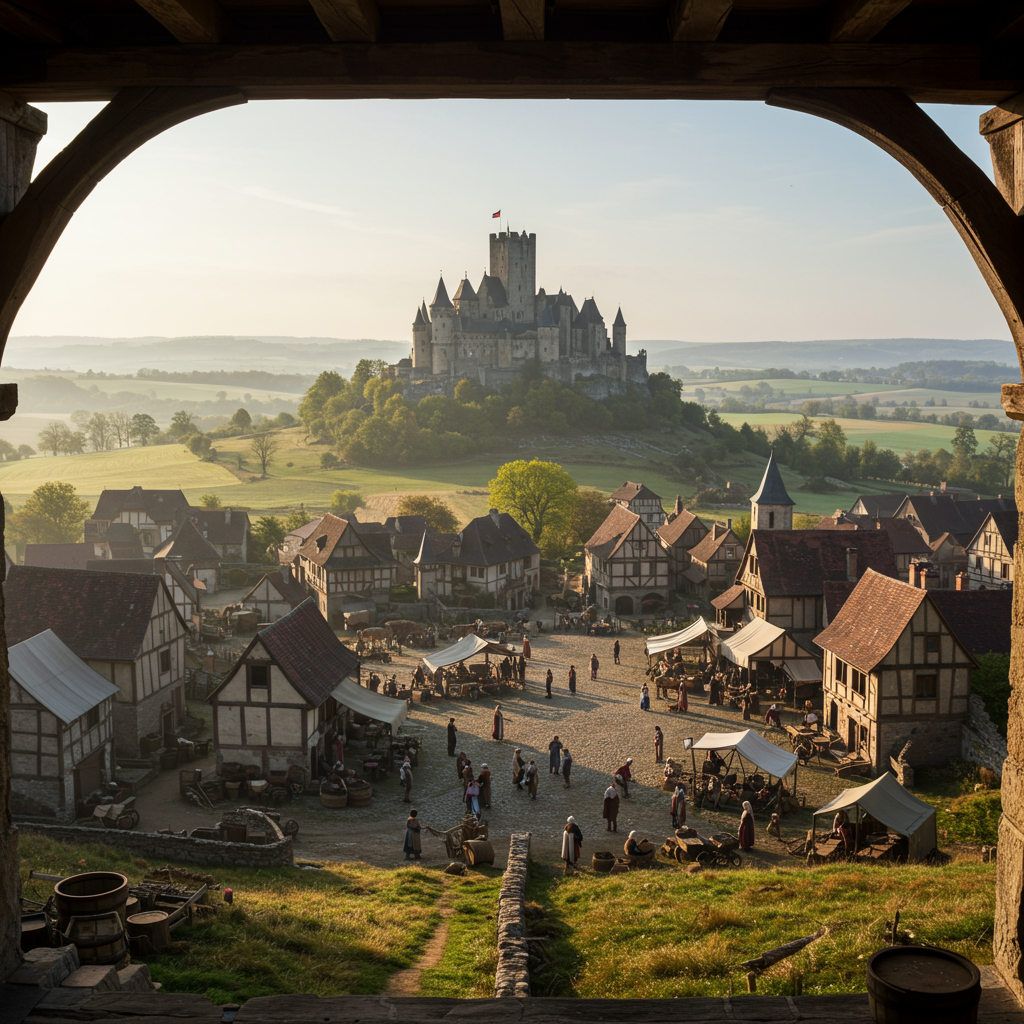
Spanning roughly from 500 to 1500 CE, the Middle Ages were anything but “dark.” Though often remembered for feudal lords, plague, and armored knights, medieval Europe was a patchwork of evolving cultures, rural rhythms, and unexpected ingenuity. Daily life wasn’t just about survival, it pulsed with faith, superstition, festivals, and community.
Peasant Life: Fields, Faith, and Feast Days
The majority of medieval Europeans were peasants, working the land owned by nobles or the Church.
Workload: Days began at dawn with farming tasks plowing, sowing, harvesting—using rudimentary tools.
Homes: Mud-and-thatch cottages with a central hearth, no chimney, and livestock often sharing space.
Diet: Bread, onions, cabbage, and ale were staples. Meat was rare except on festivals.
Religion: The Church dominated daily rhythms, from bells marking time to saints’ days and sermons.
Despite hard labor, feast days offered breaks nearly one hundred holy days per year, with music, dancing, and merrymaking.
Nobility: Lords, Ladies, and Lavish Living
The elite lived far differently, ruling from castles that were centers of defense and prestige.
Castle Life: Cold stone halls, grand banquets, tapestries for insulation and status.
Education & Leisure: Hunting, falconry, and chess. Noble children were taught manners, Latin, and swordplay.
Power & Politics: Nobles administered justice, collected taxes, and were vassals to kings in the feudal system.
Marriages were arranged for alliances, and social status was everything—even clothing was regulated by laws dictating who could wear what.
Townsfolk & Trades: Growing Urban Pulse
Medieval towns were noisy, smelly, and lively centers of commerce and craftsmanship.
Guilds: Organized trades like blacksmithing, weaving, and baking. They set prices and standards.
Markets & Fairs: Major events drawing villagers and nobles alike for spices, silks, and storytelling.
Hygiene: Public bathhouses existed, but clean water and sanitation were challenges. Streets doubled as sewers.
Townspeople navigated crowded streets and tight quarters, where disease could spread rapidly especially during events like the Black Death.
Faith & Fear: The Power of the Church
Religion saturated medieval lifenmore than just belief, it dictated law, holidays, and personal salvation.
Monasteries: Centers of learning, manuscript preservation, and charity.
Pilgrimages: People traveled hundreds of miles to visit relics, hoping for healing or divine favor.
Heaven & Hell: Art and sermons warned of eternal consequences, reinforcing Church authority.
Yet folk traditions, witchcraft fears, and pre-Christian customs still lived under the surface.
Childhood & Family: Small Hands in a Big World
Childhood was brief most began working by age 7, especially in farming families.
Play & Toys: Wooden swords, dolls, and ball games. Storytelling shaped imagination and values.
Education: Reserved mostly for boys of wealthy families, often through the Church.
Marriage & Mortality: Life expectancy was low, so people married young and had large families.
Law & Justice: Trial by Fire… Literally
Medieval justice could be bizarre by modern standards.
Ordeals: Suspects might undergo trial by fire or water, trusting divine judgment.
Punishments: Public executions, stocks, and exile were common. Law varied wildly by region.
Local Lords: Handled minor crimes, while royals and Church courts tackled bigger ones.
A Complex Tapestry
Life in medieval Europe was tough, yes but also vibrant and deeply human. It was an age where people prayed with passion, sang songs about saints and lovers, celebrated harvests, and feared what lay beyond the stars. From muddy villages to candlelit cathedrals, the Middle Ages left echoes that still shape Europe’s landscape, language, and lore.